
Story Time — I Was Already Living My Worst-Case Scenario
It seems crazy to me that 2020 was six years ago now. There’s no doubt it changed the world — it changed the way most people work. For me, what it did was highlight that I was pretty much ready to retire. I could step away. But it still wasn’t an easy decision.
When the pandemic hit and everything was uncertain — we went from thinking it would be two weeks, to four weeks, to two months, to who knows how long — I ended up having four months off. Toward the end of that time, I met with a good friend of mine, Vincent Pugliese, and we were talking about what I wanted to do next. And I thought: we’re close. Maybe I can actually retire.
This all started six years earlier, on that road to Manarola, when I realized I needed to make a change. Fast-forward, and we’d done the hard work — we’d spent the last few years putting over 70% of our income into investments, putting ourselves in a good position for the future. But it felt like we were just barely there. If you need X amount to be okay, and we were just over X — like X plus ten thousand. It wasn’t a big cushion.
So over coffee, on a park bench in Bethel Park, Pennsylvania — you couldn’t even go inside a lot of places then — we talked it through. Part of what I struggled with was the process: what does it actually look like to make it happen? Back around 2012, we thought it might be nice to get a sailboat and sail around the eastern United States — maybe do the Great Loop. As we explored that, we realized it’d be a lot easier if everything was paid off. That led to the scorched-earth mentality from 2014 to 2020. It’s probably also why, while I was on that hill in Cinque Terre and could see a sailboat anchored out in the ocean, the moment hit me so personally.
Our initial timeline had been July 2020: sell the house, buy a sailboat, become full-time cruisers. That’s what we thought we wanted back in 2014. So here it is, July 2020 — the workforce and the world have completely changed — and it’s like, I think I have enough, but I’m not sure.
And Vincent asked me one of the most important questions I’ve ever been asked in my life. He said, “Okay, let’s say you quit working. What’s the worst-case scenario?” And pretty simply, my answer was, “Well, I guess we’d make it six months or a year, I’d figure out it was too early, and I’d have to go get another job.”
His response was classic. He said, “So you’re telling me you’re already living your worst-case scenario.”
Man, did that hurt. I gave him this look — how dare you say that to me. But at the same time: you know what, you’re right. I might actually be doing the worst possible thing I could do.
I’d love to tell you I walked into work that next Monday and quit. But that’s not how it panned out. I went back to work in July; by late August I was getting frustrated; by early October we were basically told we’d be on hold until the next July. And I just wasn’t wired to get paid for what felt like doing next to nothing.
It was actually my wife who said, “You always said when we hit this number, you could quit. So quit. Go do your own thing. Figure out what you want to do next.” It took me a week of pros and cons — what would I do with my time? — and I finally said, that’s it. I gave four weeks’ notice and was done at the beginning of December.
And I can’t overstate how much better my life has been the last five and a half years, not having to report to somebody else’s timeline. I wasn’t committing five days a week, 48 weeks a year, to advancing somebody else’s goals.
I’ll admit 2022 was a little tough — the markets took a big hit, and we lost about 30% of our account values. So what did I do? My own thing. I did a lot of buying and selling on eBay — probably a story for another time — and made the extra money we needed so we didn’t touch our investments. In fact, for most of the last five years, we haven’t touched them.
It was the best thing I’d ever done. Six years of discipline, structure, and sacrifice — not spending most of what we made, just investing it — has allowed me to enjoy six years of doing pretty much whatever I want. And I’ve really come to appreciate how valuable our time is. That’s a big part of why I enjoy watches so much.
Sometimes we think we need a lot more than we do, and we put ourselves in our own set of handcuffs. So ask yourself: are you living your best life, or are you living out your worst-case scenario? For me, it was definitely the latter — and now I’m enjoying life a lot more.
The Leadership Minute — The Comment My First VP Made That Helped Me Retire at 48
I started my career in retail. I worked for Petland, Kinney Shoes, and a local pet store that eventually became the number-one independent pet store in America. I’m very proud to have worked there, and I’m still friends with those folks — Wet Pets in McMurray, Pennsylvania. If you’re anywhere in the area, it’s worth a trip, especially for aquatic fish and invertebrates.
My first real job — the one that led to my career — was with Sony Electronics. Within a few months of starting, they encouraged me to go to school and pursue an engineering degree. That led to a lot of days where I had an hour or two to kill between when my shift ended and when I had to leave for night classes. For whatever reason, I started becoming very comfortable talking to the directors and vice presidents. In those two hours, first shift was over, second shift hadn’t come in, and often just a handful of leaders remained. It was one of the best scenarios I could have found myself in as a young man and a new employee. I didn’t know I wanted to get into leadership at the time, but being around those folks made a huge difference in my life.
Eventually I got on a first-name basis with a lot of them. One was a vice president — senior vice president at the time — named Jim Bass, who eventually became CEO of Piper Aircraft, among other things. I go back to a moment in 1995 or early ’96. I was waiting to go to school, Jim was there, and we started chatting. At one point I asked him something like, “What’s it like to be in your position? That’s got to be pretty cool — you’re a VP of Sony, we’re making big-screen TVs.”
I remember what he said. “It always seems like it’s the right thing to do. But once you start climbing this ladder, sometimes it’s hard to stop, and you’ve always got to reach for the next rung. I’m not really sure what’s worth it and what’s not.” I’m paraphrasing — it was 30 years ago — but what stuck with me was the idea that climbing the ladder isn’t always all it’s cracked up to be.
There’s a Harry Connick Jr. song that captures this exact sentiment: Nowhere with Love. The singer isn’t chasing the corporate ladder; he’s focused on a good relationship and being happy with his life, not his job. That idea shaped how I approached my whole career. Ironically, I bought the CD with this song back in 1999 or so when it came out – because it was published by Sony.
It was one of those things where I was very intentional my entire career: do I want this promotion or not? Do I want to do this, or change to something else? It’s probably part of why I ended up in six different industries — I didn’t want to be the person in meetings 35, 45, 55 hours a week, even though it happened at times. I wanted to be doing other things I enjoyed. And quite frankly, it’s probably what led me to retire early, too.
If I could see Jim face to face, I’d thank him. First, for taking the time to talk to a relatively new hourly employee who assembled TVs on the manufacturing line. I’m sure he was working 70+ hours a week, but many times over, he took the time to talk to me. And second, for saying that specific thing. In hindsight, he was probably wrestling with whether to leave — because shortly after, he announced he was leaving to take a CEO role at another company. I also remember him telling me there were only about 3,000 publicly traded companies at the time, and only so many CEO positions in America, so getting one of those roles was why he was leaving Sony. (Numbers may be off, 30 years later, but that was the gist.)
Reflect on that: an hourly employee at pretty much the bottom of the totem pole had the chance to ask a senior vice president, “Why are you leaving?” That seems so foreign in a lot of ways. So as a leader — if you’re in a leadership position, put yourself in the position to have those conversations with people at all levels of your organization. You never know. A conversation that means nothing to you could completely change somebody’s life. I owe a lot of how my life turned out to those little between-shift conversations with Jim Bass.
Jim, hopefully one of these days I’ll track you down again. And if you read this — thank you.
Why a Watch? — Great Networking Watches
Let’s talk about watches that work as great conversation openers — whether or not the other person knows watches. Some appeal more to enthusiasts, some to the general public, and one crosses over to both — everybody comments on it. Spoiler: there are no Rolexes on this list.
Girard-Perregaux Laureato (green dial). Green dials command attention. There aren’t many out there, and they contrast and complement almost every color you could wear. They don’t blend in, but they’re not gaudy either — a bright yellow dial stands out but rarely goes with your outfit, whereas green is more harmonious; the colors just work well together, even with black. And enthusiasts understand what GP stands for — they’ll look at it and you’ll make a connection. If your circles have a lot of watch guys, this is a great networking watch to add to the collection.
Zenith El Primero Chronomaster Sport (skeleton dial). The skeleton version is a natural conversation starter, and then there’s the story of the movement — first, it was the first automatic chronograph; second, the Rolex Daytona is what it is in part because Zenith made its movements for years. That gives you a story to tell, and it appeals to the higher-horology crowd. At the very least, people say, “That’s an interesting watch — what is that?” and you’re into a conversation.
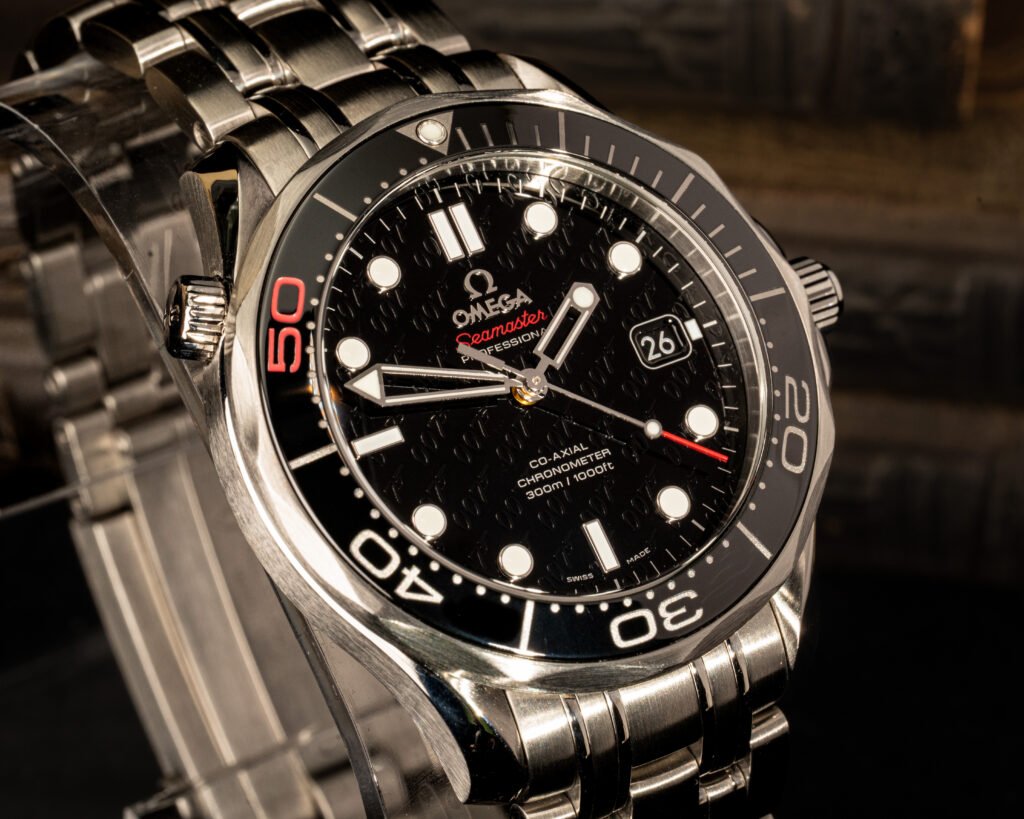
Omega Seamaster (James Bond). Very popular with collectors, but it also connects with almost everyone. It doesn’t matter which one — some stand out enough that people instantly connect them with James Bond even if they don’t know why, and with others, when someone says “nice watch,” you can mention it’s a Bond edition. Everybody knows who James Bond is, and there’s a little appeal there — maybe you feel a bit like Bond yourself, that level of style and sophistication. Omega is a very well-known brand, so it opens a lot of conversations; the Bond Seamasters take it another level.
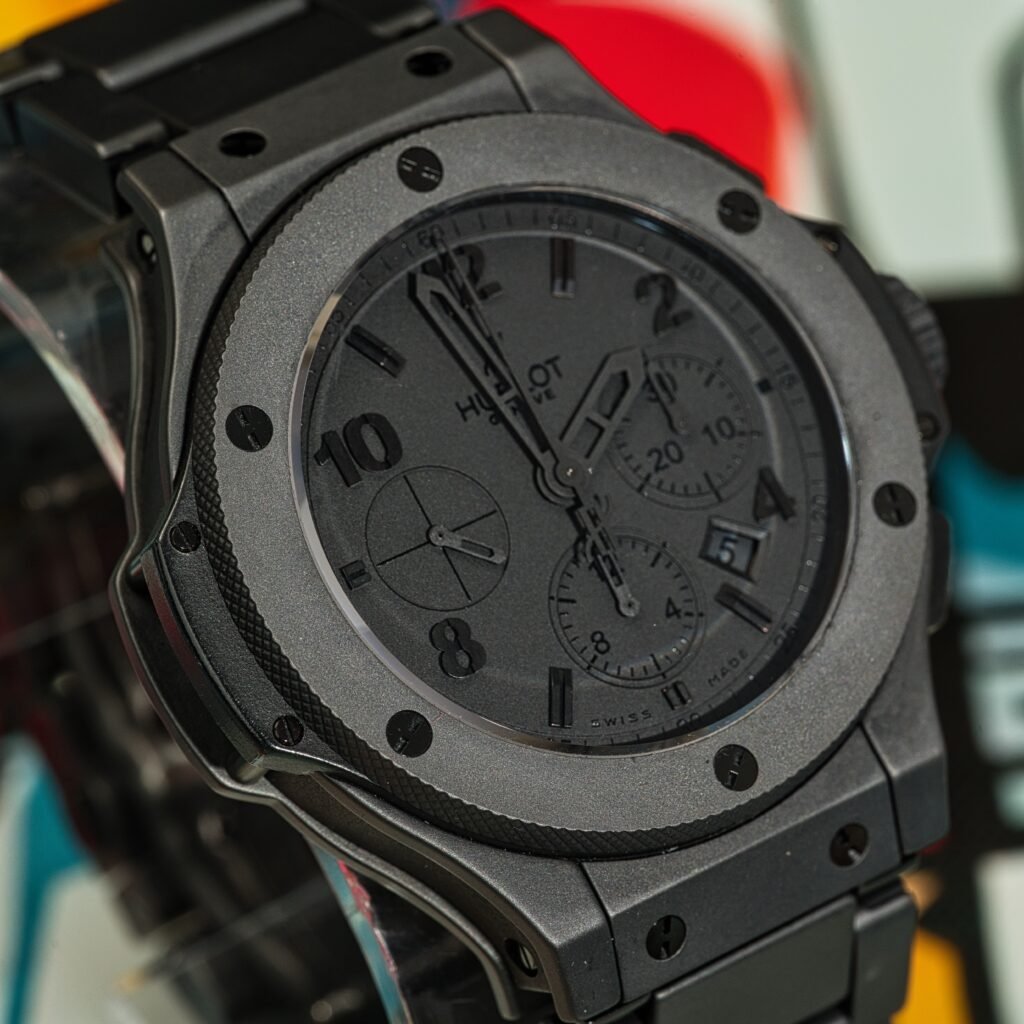
Hublot Classic Fusion. This one might be controversial — a lot of high-end watch guys look down on the brand — but the Hublot line offers accessible luxury that registers with non-watch people without being Rolex-y. Everybody knows a Rolex, but it also carries some negative connotations for certain groups. A Hublot is more “oh, that’s interesting, that’s different, that looks expensive.” It’s a great conversation starter without the weight of “ooh, fancy Rolex.” In watch circles it’s fine too. And frankly, Rolex makes over a million watches a year — everybody can have one if they want it. One benefit: Hublots don’t hold their value the way Rolex does, so you can pick up a Hublot that cost more than a Rolex for maybe half the price.
IWC Top Gun “Lake Tahoe” Chronograph. A fantastic conversation starter and a great networking watch. The white ceramic case and gorgeous dial draw attention from across the room — in most conditions this watch just glows on your wrist. The one exception might be a very light complexion, where it could look a little out of place, but that’s down to your own taste. For most people, especially in summer and especially with a slightly darker complexion, the Lake Tahoe really commands attention. Almost everybody asks about it.
So if you want great networking watches without resorting to a Rolex for brand recognition, these would be my top choices.
Tips & Traps — Mazal: Your Reputation Is Everything
In the watch-trading industry, there’s this concept of Mazal. Basically, your word means everything. If you commit to something, you’ve made an agreement, and you do not back out. Because when you start doing that, people learn they can’t trust you, can’t depend on you — you’re not trustworthy. And the entire secondary watch market is built on trust. If you don’t trust the person you’re buying from or selling to, are you going to trust them on a $5,000, $10,000, or $25,000 transaction? No.
That’s why Mazal matters so much.
Let me give you three examples where Mazal came into play — two positive, one not.
One: I accidentally bought a watch without papers. The seller didn’t say it had papers; he also didn’t say it didn’t. I just overlooked it, because it was a watch I’d wanted for a long time. (Maybe in a future issue I’ll get into why box and papers matter so much.) But when I realized ten or fifteen minutes later — “there’s no warranty card in any of these photos” — I did not go back and say, “never mind.” I sent the wire. We went through with the deal. I enjoyed the watch for a few weeks, and it eventually sold. I didn’t make much on it, but I was not going to back out because I didn’t ask the question. I’d already committed — I’d already said, “I’ll take it.” I was willing to potentially lose money rather than tarnish my reputation. That’s Mazal: if you make a mistake, you eat it. And if you misrepresent something — hopefully unintentionally — and your buyer flags it, you’re expected to make it right. Your word has to be as good as gold.
Two: I made an offer on the wrong watch. There are two very similar Omega Seamaster chronographs — a regatta version and a standard, non-regatta version. I thought the one posted in a very competitive group was exactly what I was looking for. It wasn’t. But I’d made the offer and bought it — because sometimes you have seconds to claim these watches in wholesale dealer groups, especially the harder-to-get pieces. Fifteen minutes later: “oh, what did I do?” But I’d already committed, so I sent the wire and did the deal. I ended up selling that watch in two days for a nice profit, and I told the dealer I’d bought it by accident. He thought it was hilarious — and then I actually ended up selling two of that model after that. It worked out fine. But I wasn’t going to back out; I was going to take my medicine if I needed to.
Three: the other side of Mazal. I had an existing client who’d bought from me before. He wanted a very specific watch, and I was happy to source it — I had several other people who wanted the same one, but I put him at the front of the line. I tend to work in a structured way: we agree on a price, “the price will not exceed this, is that okay?” He said yes. I said, give me a couple weeks. I ended up finding one of the best examples of that watch — it might take another year to find a better one that isn’t brand new. It had just been serviced by the manufacturer, had a fresh one-year warranty, had been fully polished, and presented as new despite being a few years old — it had just had its five-year service. I let him know: “I’ve got this one coming in for you, still good at this price?” “Oh yeah, absolutely, sounds fantastic.” I sent the final photos a couple days later. And then, twelve to eighteen hours go by, and he says, “Hey, I can get a new one for like $2,700 more — can’t we do a little better on the price?”
I about lost it inside. Now I’ve had this thing for a couple days, and I have plenty of other people who will buy it. I said, wait a minute — three weeks ago we were good on price, four days ago when I had it lined up we were good, two days ago you were excited, and now all of a sudden you want to renegotiate? That’s not how we do things. We had an agreement. This is a great price. So — go buy the new one. And I sold it that same day to somebody else.
What that person did was get himself removed from my preferred client list. I can’t work with people like that — because what’s to say the next thing they try isn’t to scam me: claim the watch wasn’t quite right when it was, or swap out a movement, or damage it themselves. The level of trust and integrity you need in the secondary market is paramount.
So here’s the tip for anybody getting into watches: take your time, but value your own word. Have integrity. If you commit to something, honor it. Don’t strike a deal, pay for a watch, have someone bring it in — and then ask for a discount after the fact, before you’ve even seen it. And definitely don’t try it on one of the hottest watches in the world, one with an average dealer hold time of less than 24 hours, because you’ve just revealed that you’re simply a penny-pincher, not a person of integrity, and not interested in relationships at all. Our time on this earth is way too valuable to surround ourselves with people like that. So take Mazal to heart — if you want good relationships, and not just in the watch industry, make sure people can trust your word.
On the Wrist — The Omega Seamaster: Dive Heritage, Real Value
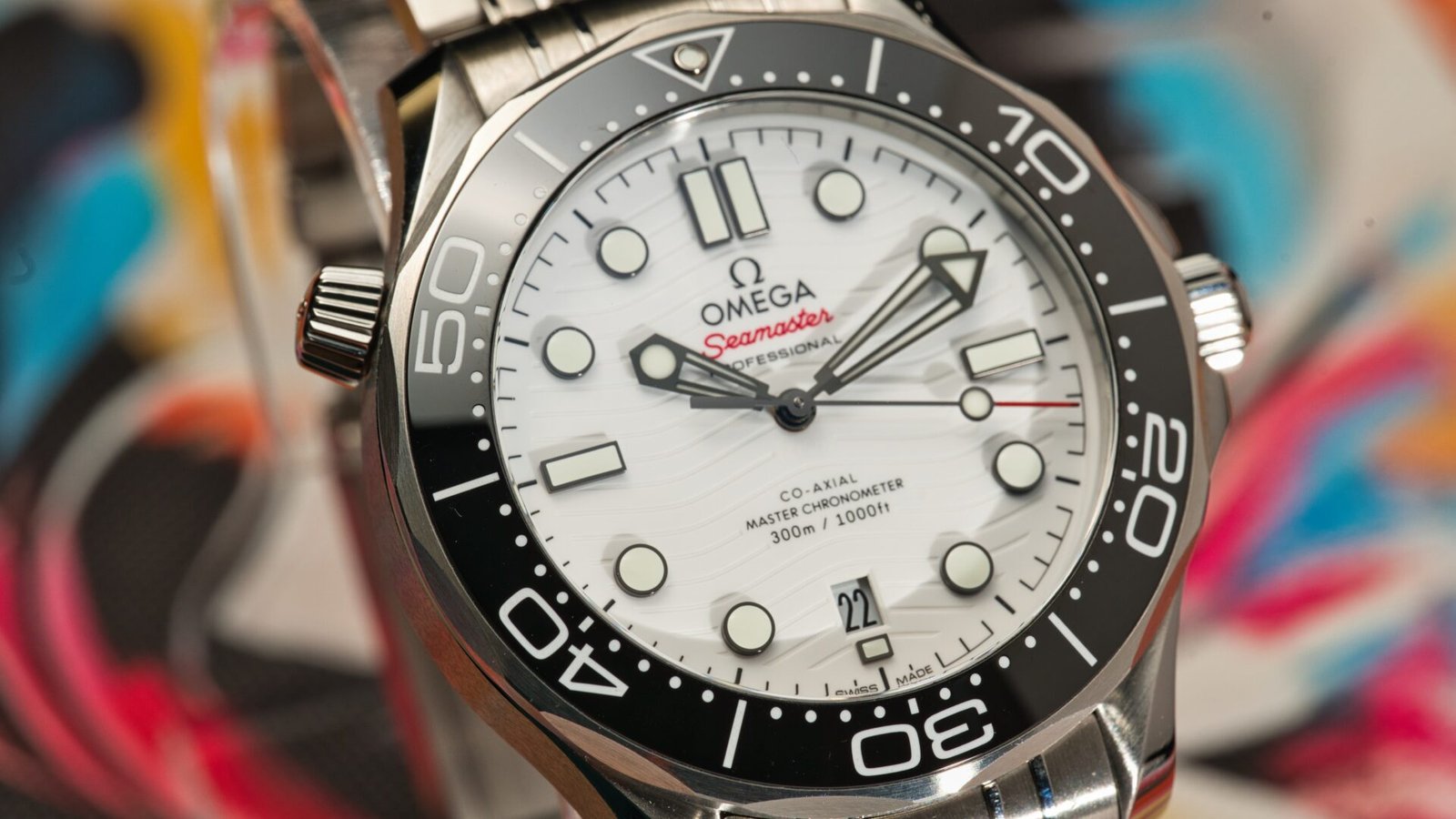
Here’s the thing about the Seamaster: it’s the most culturally loaded watch that doesn’t look like it’s trying. A Rolex announces itself. The Seamaster Professional says, “I’m a capable person, I know what I’m doing, and I have good taste” — not that Rolex wearers don’t have good taste, but the Seamaster doesn’t carry the same cultural weight. Watch people still recognize it immediately, and everyday people connect it to James Bond without really knowing why. Either way, you win the room with quiet authority.
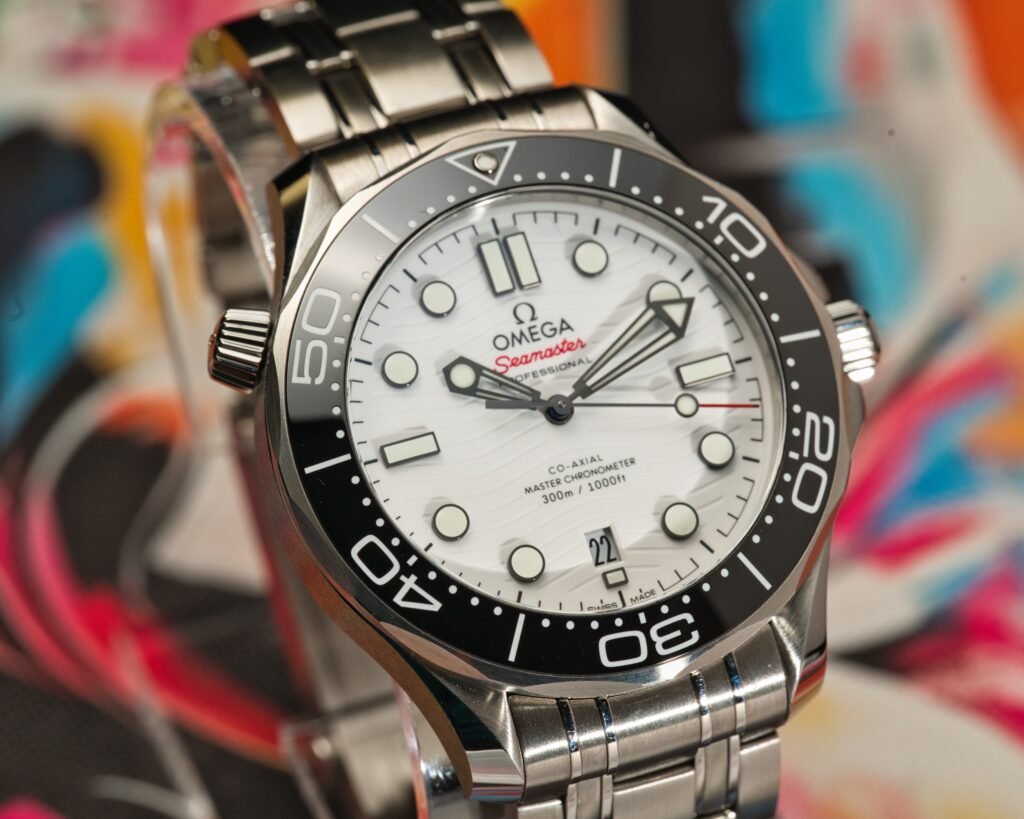
On the specs — honestly, any modern watch with 100 meters or more of water resistance suits 99.9% of us. None of us are diving 300 feet regularly. The water resistance is for the pool, the beach, everyday wear. And speaking of everyday wear: when you put a Seamaster on, it feels substantial without being heavy. The bracelet has just enough weight that you know it’s there — it reminds you it’s there, which is a nice reminder of how valuable our time really is. Then there’s the ceramic bezel: it feels permanent, like you don’t have to worry about scratching it, which I love, because you don’t have to baby this watch.
And the versatility — this watch goes from a boat or a beach to the boardroom without changing. That’s rare. Most sport watches compromise significantly when you try to dress them up; the Seamaster doesn’t. If you like the gray dial with the blue bezel specifically, it reads dressier and can go almost business-casual with a jacket. It wouldn’t be my first choice for that, but it can do it. (I’ve also worn a bright Breitling Superocean with a suit, so.) And it comes in a ton of colors — seaweed green, white, black, gray with blue, solid blue, summer blue, black wave — so many variations to suit your personality and style, all within the same watch.
For conversation starters: the laser-engraved wave texture on the dial. Most people don’t notice it in photos, but when they see it in person in the right light — “hey, that’s a cool pattern on that dial” — and at that moment you’ve got them. Now you’re into a nice conversation. And there’s always the simple “wow, that’s a really nice watch,” because it is.
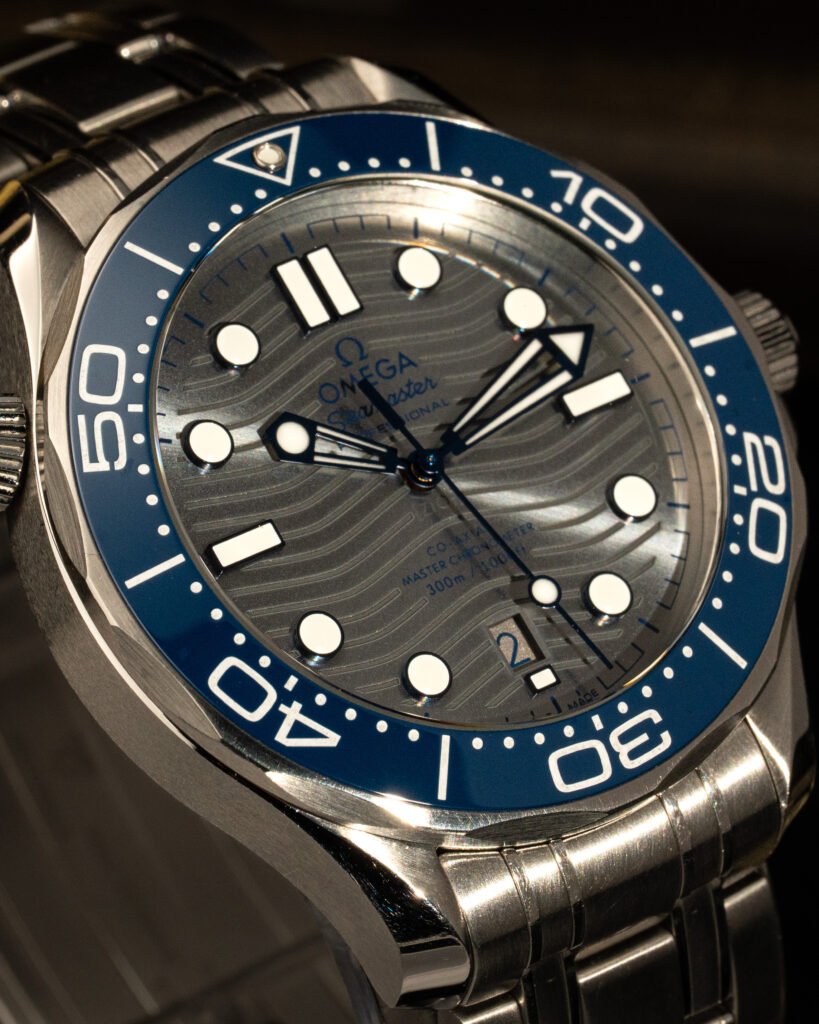
For me, it comes down to feeling. This is the watch you reach for when you want to feel capable — it’s called the Seamaster Professional, and maybe there’s something subliminal in that for us. It’s not flashy, but it’s not understated either. It’s just capable. And in our everyday roles, that’s how most of us want to be seen — like you could take it anywhere and it would do its job.
There’s a reason my average hold time on an Omega Seamaster is about two days, maybe less: it’s a modern classic, suitable for almost any wrist and any occasion. It falls short of being a true dress watch, but for almost all of us, the Seamaster is up to whatever your day throws at it.